Konpa Continues to Rise: Haitian Dance Worldwide | KOTR
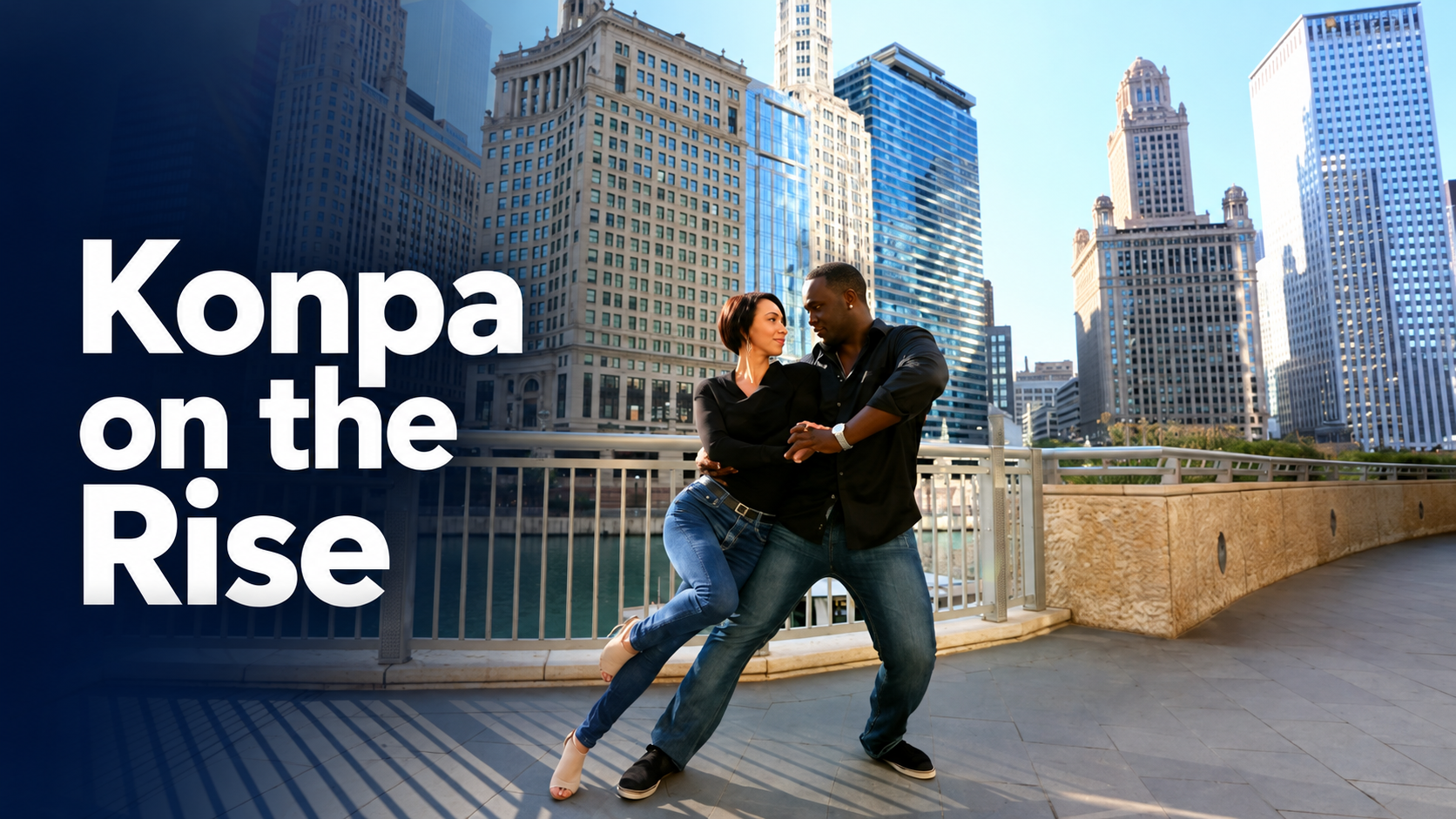
Our name carries our purpose: Konpa on the Rise. Every workshop, every introduction to the vibes, and every student finding confidence on the dance floor gives that name meaning.
For more than two decades, Sony Laventure has shared Haitian Konpa dance with people discovering its movement, musicality, and connection. Since founding KOTR in 2007, he has continued building spaces where newcomers and experienced dancers can learn, practice, and appreciate the culture behind the steps.
The work continues because there are still people who have never heard a Konpa song, never joined a Konpa class, and never experienced that moment when the music begins to make sense through movement. We want to give more of the world a taste of how good Konpa can feel.
What is Haitian Konpa dance?
Haitian Konpa dance is a social dance practice rooted in Haiti and closely connected to Konpa music, also spelled Kompa. Partner dancing emphasizes rhythm, coordinated movement, and communication between dancers. Solo practice can also help learners develop timing, footwork, and body control.
The music and the dance belong together, but their histories should not be collapsed into a single invention story. Konpa music developed in mid-twentieth-century Haiti; the social dancing associated with it is a living practice passed through families, gatherings, communities, and instruction.
UNESCO’s listing for The Compas of Haiti recognizes this Haitian music and dance tradition. Its cultural significance extends beyond a performance: it connects people through shared music, participation, and identity.
At KOTR, learning Konpa means listening as well as moving. A dancer might begin by finding a steady pulse, then learn how a weight change or a pause can follow something heard in the song. With a partner, that learning also involves paying attention to another person.
How has KOTR kept its mission moving?
Our founder, Sony Laventure, brings more than two decades of personal involvement to this work. KOTR’s organizational story began in 2007. Those timelines are connected, with years of Sony’s dance journey preceding the founding of the brand.
Our mission remains to Protect, Preserve, and Promote Haitian Konpa culture through dance. We put that mission into practice by teaching movement alongside cultural appreciation and creating opportunities for people to experience the music together.
KOTR’s founder page documents teaching in Nairobi, Kenya, and a workshop in the Netherlands. Independent reporting adds another point of reference: Associated Press reported in December 2025 that Sony had returned from teaching instructors in Kenya.
These exchanges matter because a visiting workshop can become part of a longer learning journey. Participants can return to their own practice, ask better questions, and share their interest with others. For us, continuing to rise means continuing to teach with purpose, wherever the next opportunity takes us.
Why does Konpa appeal to different experience levels?
People arrive with different goals. Some want to feel comfortable at a Haitian celebration. Others want a new social experience, a connection to their heritage, or a deeper understanding of music they already love.
Beginners can start with a manageable foundation
You do not need an impressive combination to begin. Finding the rhythm, practicing a comfortable weight transfer, and learning how to communicate a basic movement offer useful starting points.
Our Broward Konpa classes welcome beginners and experienced dancers. Choosing the right session gives a new learner room to ask questions and build familiarity without expecting instant mastery.
Open-level dancers can revisit familiar skills
An open-level workshop can bring people with varied experience into the same learning space. The topic and pace still matter, so check the session description before registering.
A familiar movement may reveal something new when you focus on timing, balance, or clarity. Progress can be a smoother transition or a more comfortable connection rather than a longer sequence.
Advanced dancers can explore musical choices
Experienced dancers may want to refine control, vary their expression, or respond more thoughtfully to changes in a song. Creative exploration becomes more meaningful when it grows from a strong foundation.
We encourage dancers to push their understanding while respecting a partner’s comfort and the character of the music. Expression should create a shared experience that both dancers can enjoy.
Where is Konpa finding international learning spaces?
Konpa’s international presence includes the work of many teachers, musicians, organizers, and communities. KOTR contributes to that wider story alongside others creating their own opportunities to learn.
In Africa, Sony’s documented teaching in Kenya provides a concrete example of Haitian dance instruction reaching East African participants.
In Europe, Konpassion describes its work teaching Konpa and Haitian culture in the Netherlands since 2022. Its Rotterdam program includes beginner and more experienced levels. This is another school’s contribution to the learning community, separate from KOTR’s documented Netherlands workshop.
In Asia, a Chiang Mai Konpa bootcamp listing advertises instruction with Mr. Taras at Bailamos Chiangmai in Thailand, covering foundations, technique, and musicality. This is evidence of an advertised learning opportunity, rather than a KOTR event or proof of its attendance.
The Caribbean remains central to this story because Haiti is Konpa’s home. UNESCO’s documentation places community participation and transmission at the heart of the tradition. International recognition should direct attention back to those cultural roots and the people who sustain them.
Together, these examples show several ways people encounter Konpa: community practice, structured courses, and visiting workshops. Each creates a possible entry point for someone ready to learn.
How can Konpa grow while keeping its Haitian roots?
Welcoming new dancers and preserving cultural identity can support the same goal. A meaningful introduction helps people understand where the dance comes from, whose music they are hearing, and how their movement relates to that music.
Teachers can credit the artists they use, acknowledge their own learning influences, and explain when they are presenting a personal interpretation. Students can stay curious, listen beyond a short video clip, and seek cultural context alongside technique.
At KOTR, we want creative expression to carry that awareness forward. A new audience gives us another opportunity to introduce Haiti through joy, artistry, and connection.
Frequently asked questions
Do I need a partner to inquire about lessons?
You can contact KOTR on your own. Tell us whether you plan to attend solo or with a partner, and we will help you understand the arrangements for the session you choose.
Can experience in another dance help me learn Konpa?
It may help with balance, coordination, or partner awareness. Give yourself time to learn Konpa’s musical relationship and movement approach rather than assuming another dance’s habits will always transfer.
What should I tell KOTR when requesting a private lesson?
Share your experience, goals, preferred availability, and whether you are learning alone or with someone. That information helps us discuss an appropriate lesson and confirm the practical details.
How can I choose a Konpa workshop while traveling?
Read the level, topic, instructor information, and organizer’s current booking details. A published listing can help you discover a workshop; contact the organizer to confirm it before making travel plans.
Can videos support my learning between classes?
Yes. Use demonstrations to observe timing and review ideas from instruction. Combine watching with deliberate practice and feedback, especially when developing partner communication.
Take your next step with KOTR
After more than two decades of Sony sharing his passion, we are still introducing people to Konpa and discovering new opportunities to connect. Our name continues to express our commitment: Konpa on the Rise.
If you have never experienced Haiti’s Konpa dance culture, now is the time. Explore KOTR’s workshop information, discover our Palm Beach County classes, or request private Konpa lessons. Choose your next learning experience and come feel the music with us.
Leave a Reply